

Industrial skid fabrication has become one of the most critical building blocks of modern plant investments today. Traditional construction and installation methods are rapidly being replaced by prefabricated modular structures built in workshops. Ensuring time and cost control in complex engineering projects is the primary goal of every enterprise. In this article, the advantages and technical details of modular process systems, which radically shorten plant commissioning times, will be examined.
The Role of Modular Process Systems in Industry (Definition)
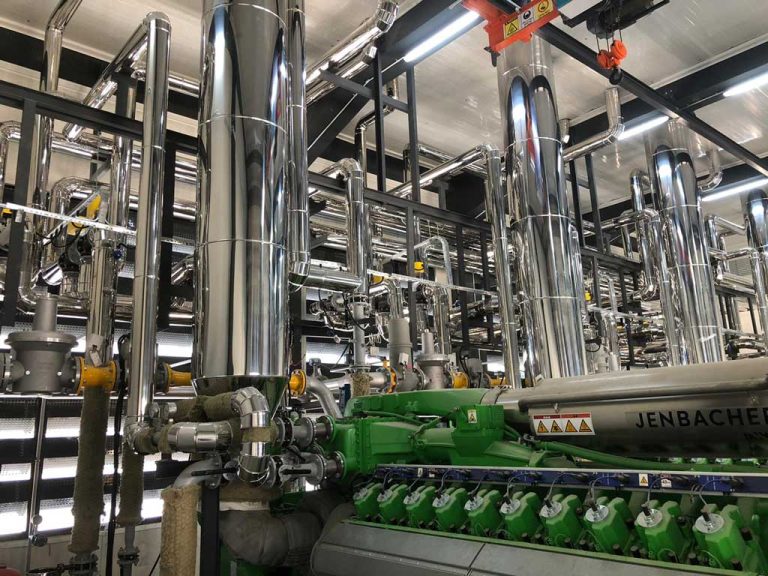
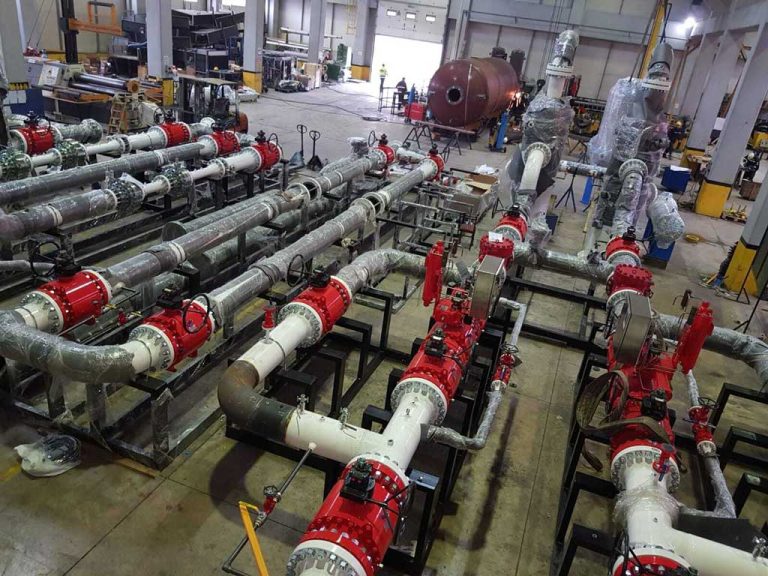
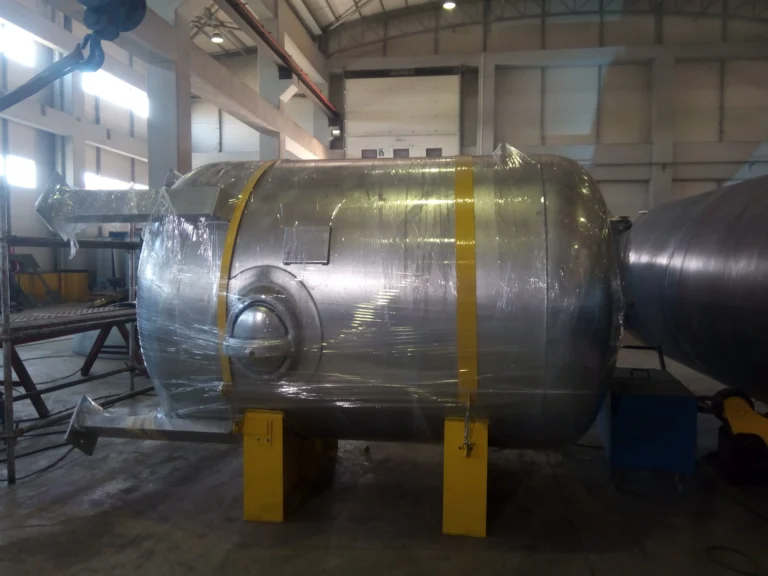
The term “skid” refers to a runner, frame, or chassis. In an industrial context, a skid is the integration of all equipment necessary for a process to operate onto a single platform. This platform includes pumps, heat exchangers, valves, piping lines, and automation panels. These complete assemblies are referred to as modular process systems.
The system is like a completed piece of a giant jigsaw puzzle. It is fabricated in a controlled factory environment and shipped to the site as a single unit. On-site, only the connection of the main inlet and outlet lines is required.
Challenges and Needs Encountered in Traditional Field Installation
In traditional plant installations, all components are delivered to the site individually. Assembly operations are performed entirely within the construction site environment. This situation poses several challenges for enterprises:
- Adverse Weather and Delays: Welding and installation work conducted in open areas are directly affected by weather conditions.
- Occupational Health and Safety (OHS) Risks: In crowded construction site environments, working at heights and heavy lifting operations increase the risk of accidents.
- Lack of Coordination: Different subcontractors (civil, mechanical, electrical) working on site simultaneously lead to conflicts and interference.
- Prolonged Downtime: When adding a new line to an existing plant, the lengthy installation period on-site halts production.
To eliminate these risks, enterprises have sought more controlled and rapid solutions. This demand has driven the industry toward modular fabrication.
Plug-and-Play Solutions and Their Advantages
The most definitive solution to these challenges is relocating fabrication to a controlled workshop environment. Skid systems operating with a plug-and-play process logic eliminate construction site risks. All welding, piping, and wiring processes are carried out in workshops under ideal lighting and temperature conditions.
The primary advantages provided by the modular fabrication method include:
- Rapid Installation: While civil works continue on-site, equipment fabrication is carried out concurrently in the factory. This shortens the overall project duration by up to 30%.
- Superior Quality Control: Orbital welding and precise measurements performed in a factory environment are far more flawless compared to manual operations on-site.
- Compact Design: In facilities with limited space, systems that occupy minimum footprint are engineered using advanced design software for layout optimization.
- Portability: In the event of plant relocation or layout restructuring, the skid unit can be easily transferred to its new location with the aid of a crane.
Factory Acceptance Testing (FAT) and Quality Assurance
The greatest engineering advantage of modular systems lies in their testing processes. Before the unit is dispatched to the site, it undergoes a rigorous Factory Acceptance Testing (FAT) phase at the manufacturer’s facility.
During these tests, the system is pressurized with water or test fluids. Pumps are operated, valves are tested, and automation scenarios are verified. Any potential faults are resolved in the factory before site delivery. Consequently, only a Site Acceptance Test (SAT) is performed on-site to quickly commission the system.
Our Skid Frame Assembly and Integration Approach as DRS Makina
As DRS Makina, we offer advanced engineering solutions that save time in turnkey plant installations for our clients. In our Skid Fabrication processes, which form the heart of the process, we model your P&ID diagrams in 3D using SolidWorks. This allows us to resolve piping interferences with millimetric precision prior to production.
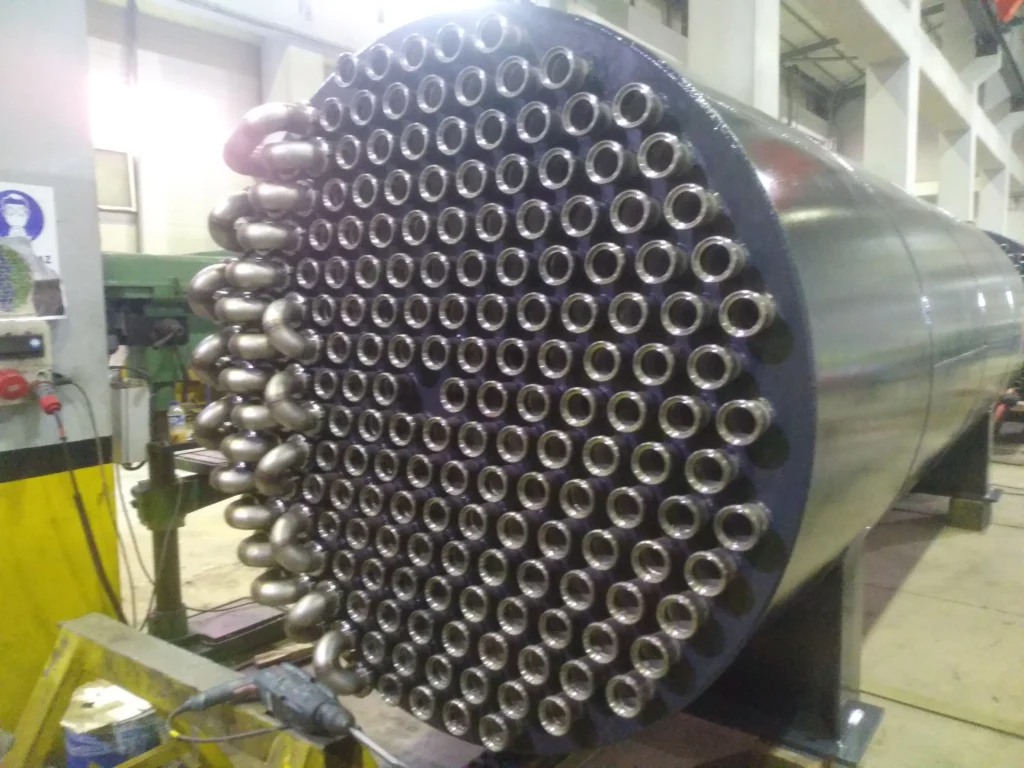
We do not limit ourselves to mechanical assembly alone. We also manufacture the critical heat exchangers discussed in our previous article, Industrial Heat Exchanger Fabrication and Heat Transfer Efficiency, in-house and integrate them onto the skid frame assembly. The systems, fully tested at our facility, are transported by our expert field teams and connected to your main lines under a zero-leakage guarantee as part of our Field Piping Services.
Conclusion
Completing projects on schedule and within budget is a major achievement in competitive industrial environments. Industrial skid fabrication is the safest modern engineering method to eliminate traditional construction site challenges. Managed from a single source from design to factory acceptance testing, modular process systems minimize your plant downtime. Partnering with a competent engineering firm guarantees the trouble-free commissioning of your system with a plug-and-play approach.
You may visit our services page to review our complete range of capabilities.
Frequently Asked Questions (FAQ)
1. In which industries is skid fabrication used? It is heavily utilized in the chemical, petrochemical, water treatment, food, pharmaceutical, and energy sectors. It is particularly preferred for chemical dosing, heating/cooling modules, and pump stations.
2. Why is Factory Acceptance Testing (FAT) important? It is the full-capacity operation and testing of the system at the manufacturer’s workshop prior to dispatch. This eliminates potential site issues and costly field modifications in advance.
3. Can modular systems be integrated into existing plants? Yes, this is the primary advantage of modular systems. The skid unit is prepared off-site without interrupting production in the existing factory. Integration is achieved with only a few days of planned downtime by executing the piping connections to the legacy system.
4. Which materials are preferred for skid frames? Generally, due to high load-bearing capacity, the structural frame (chassis/skid) is manufactured from carbon steel and protected against corrosion with epoxy paint. The piping and equipment in contact with the process fluid are fabricated from stainless steel (such as 304L, 316L, etc.).