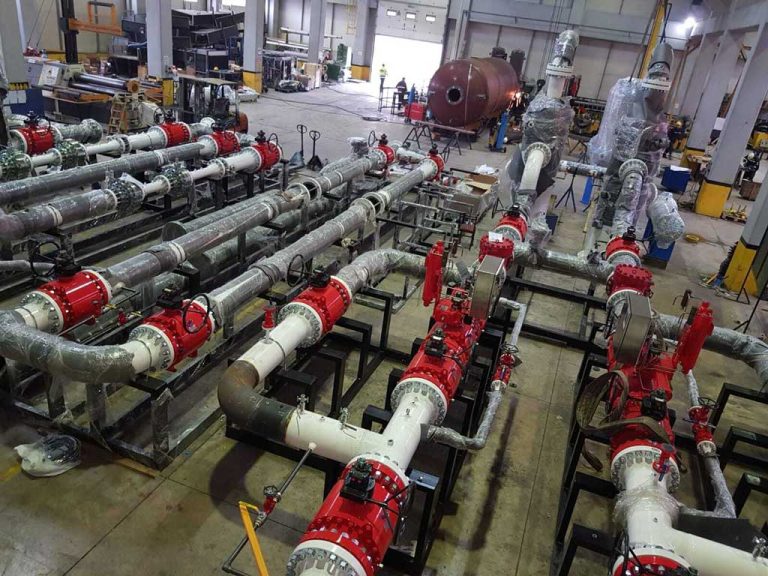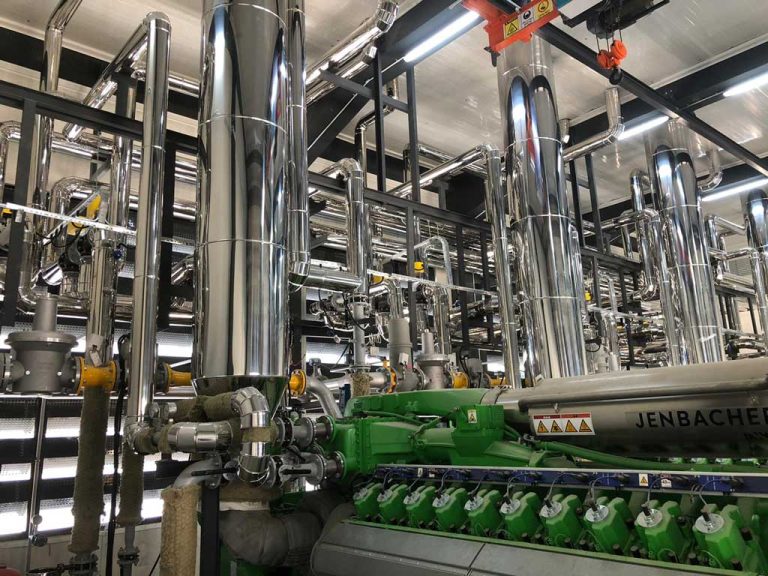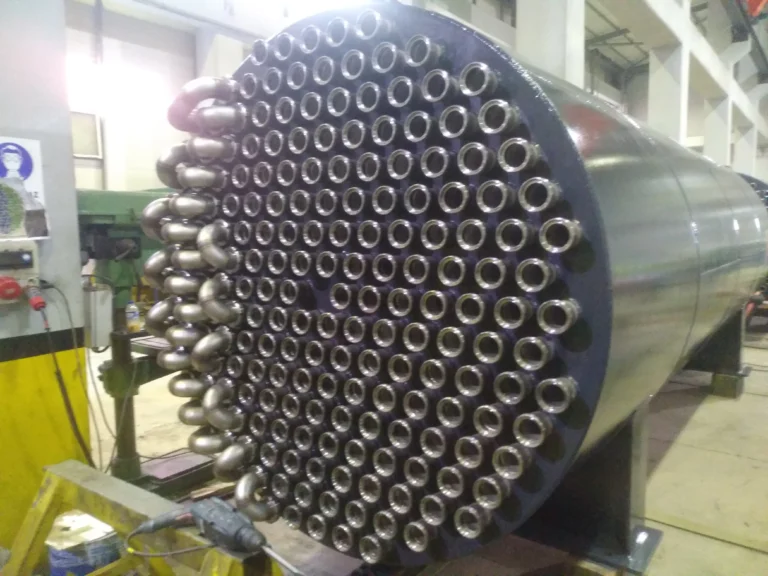


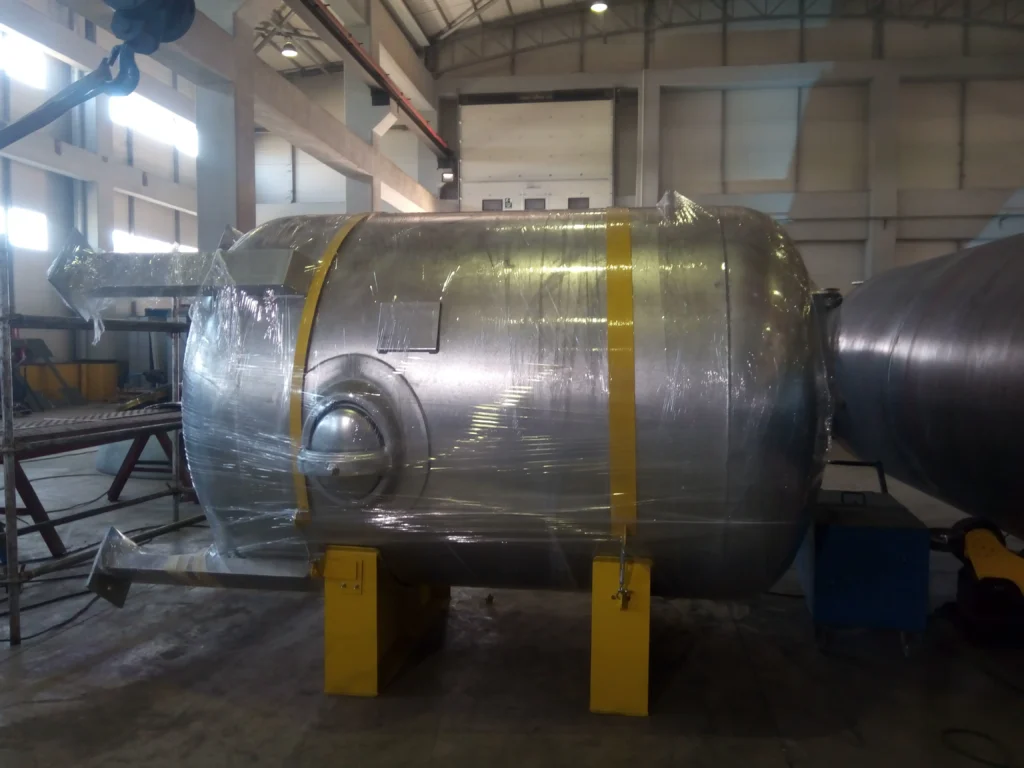
Industrial pressure vessel fabrication is one of the most precise engineering processes forming the heart of modern production plants. The safe processing of fluids under high pressure and temperature in the petrochemical, energy, chemical, and pharmaceutical industries is made possible by these vessels. Any design or manufacturing defect can lead to critical safety breaches with severe consequences. Therefore, the fabrication process must strictly comply with international codes and stringent inspection mechanisms.
The Role of Pressure Vessels in Industrial Plants (Definition)
Pressure vessels are closed containers designed to hold gases, liquids, or vapors by enduring internal or external pressure. Within facilities, they function as reactors, separators, storage tanks, or heat exchanger shells. Depending on the nature of the process, they may be required to withstand extremely high temperatures or cryogenic conditions. These components are the most critical nodes of the **process equipment** network. Their design is fully customized according to the physical and chemical conditions of the specific process.
Challenges and Needs Encountered in the Fabrication Process
In heavy industrial projects, the greatest challenges faced by enterprises typically stem from non-standard manufacturing. The primary challenges include:
- Incorrect Material Selection: Using metals incompatible with the corrosive effects of the process fluid rapidly reduces the lifespan of the equipment.
- Design Errors: Failure to accurately reflect pressure and temperature fluctuations in mechanical fatigue calculations.
- Welding Defects: Poor welding workmanship results in leaks or catastrophic failures under high pressure.
- Lack of Certification: The inability to obtain approval from international inspection bodies for the fabricated equipment prevents plant commissioning.
These challenges generate a vital need for long-lasting, fully traceable, and certified equipment for enterprises.
Engineering Standards and Solution Methods
For safe manufacturing, resolving these problems depends on strict compliance with global engineering disciplines. Every step of the fabrication process must be fully documented and rigorously tested.
Compliance with ASME and EN Codes
In international projects, ASME standards (specifically Section VIII Div. 1/Div. 2) represent the most widely accepted set of rules. For the European market, EN 13445 standards and PED 2014/68/EU directives are applied. During the pressure vessel design phase, mechanical calculations required by these codes are completed. Plate thicknesses, flange ratings, and welding details are determined in accordance with these standards. Fabrication begins only after the design is verified.
Non-Destructive Testing (NDT) and Leakage Tests
High-technology testing methods are utilized to verify fabrication quality. The most common quality control procedures implemented are as follows:
- Radiographic Testing (RT): Detection of voids and cracks in the internal structure of weld seams using X-rays.
- Ultrasonic Testing (UT): Measuring material thickness and identifying internal defects using sound waves.
- Liquid Penetrant Testing (PT): Making surface-breaking microcracks visible using chemical penetrants.
- Hydrostatic Testing: Subjecting the equipment to water pressure at 1.5 times the design operating pressure after the completion of fabrication.
Consequently, the **leakage testing** of the equipment is successfully completed through these validation steps.
Our Approach to Pressure Vessel Fabrication as DRS Makina
Our company operates on a zero-defect principle in pressure vessel fabrication, backed by years of industrial engineering expertise. We act not merely as a manufacturer, but as a solution partner. In your projects, we manage the entire lifecycle starting from the <a href=”/tasarim-ve-muhendislik”>Design and Engineering</a> phase with our expert engineering team. Mechanical design is performed in compliance with ASME, EN, and API norms using advanced engineering software.
Under the supervision of our certified welding engineers and operators, premium Pressure Vessel Fabrication is carried out in our fully equipped facilities. A transparent quality book, covering every stage from material certificates to hydrostatic test reports, is presented to our clients. To learn more about diverse plant requirements, you may also review our guide titled Process Equipment Selection Guide.
Conclusion
Safety and efficiency in industrial plants are directly proportional to the quality of the equipment utilized. Pressure vessels represent critical assets with high capital expenditure and high risk profiles. Pressure vessels engineered properly, built from certified materials, and fabricated with flawless welding workmanship guarantee trouble-free operation of your plant for decades. Therefore, partnering with experienced and competent engineering firms during the fabrication process stands as the most sound investment strategy.
You may visit our services page to review our complete range of capabilities.
Frequently Asked Questions (FAQ)
1. Which materials are used in pressure vessel fabrication? Depending on process requirements, carbon steels, 304L/316L series stainless steels, and special alloys with high corrosion and thermal resistance such as Duplex and Titanium are utilized.
2. What is the significance of ASME Certification? ASME certification internationally verifies that the fabricated equipment complies with strict design, manufacturing, and testing standards established by the American Society of Mechanical Engineers. This accreditation is the ultimate guarantee of safety.
3. How often must periodic testing of pressure vessels be conducted? While it varies depending on national regulations and the corrosive severity of the process, a visual inspection is generally mandatory once a year, supplemented by hydrostatic and NDT inspections at specified intervals.
4. Why is hydrostatic testing conducted with water? Because water is an incompressible fluid, it does not pose a risk of rapid expansion or explosion like gases in the event of a structural failure under high pressure. Therefore, water is utilized in these tests for safety purposes.