

Equipment Fabrication
Pressure Vessel Fabrication: SOCAR Petkim 215-K-203-3A/3B Suction Surge Drum Project
About the Project
Suction Surge Drum, ASME Sec VIII Div 1, Class 600 Flange, PED Module G, TÜV AUSTRIA TURK
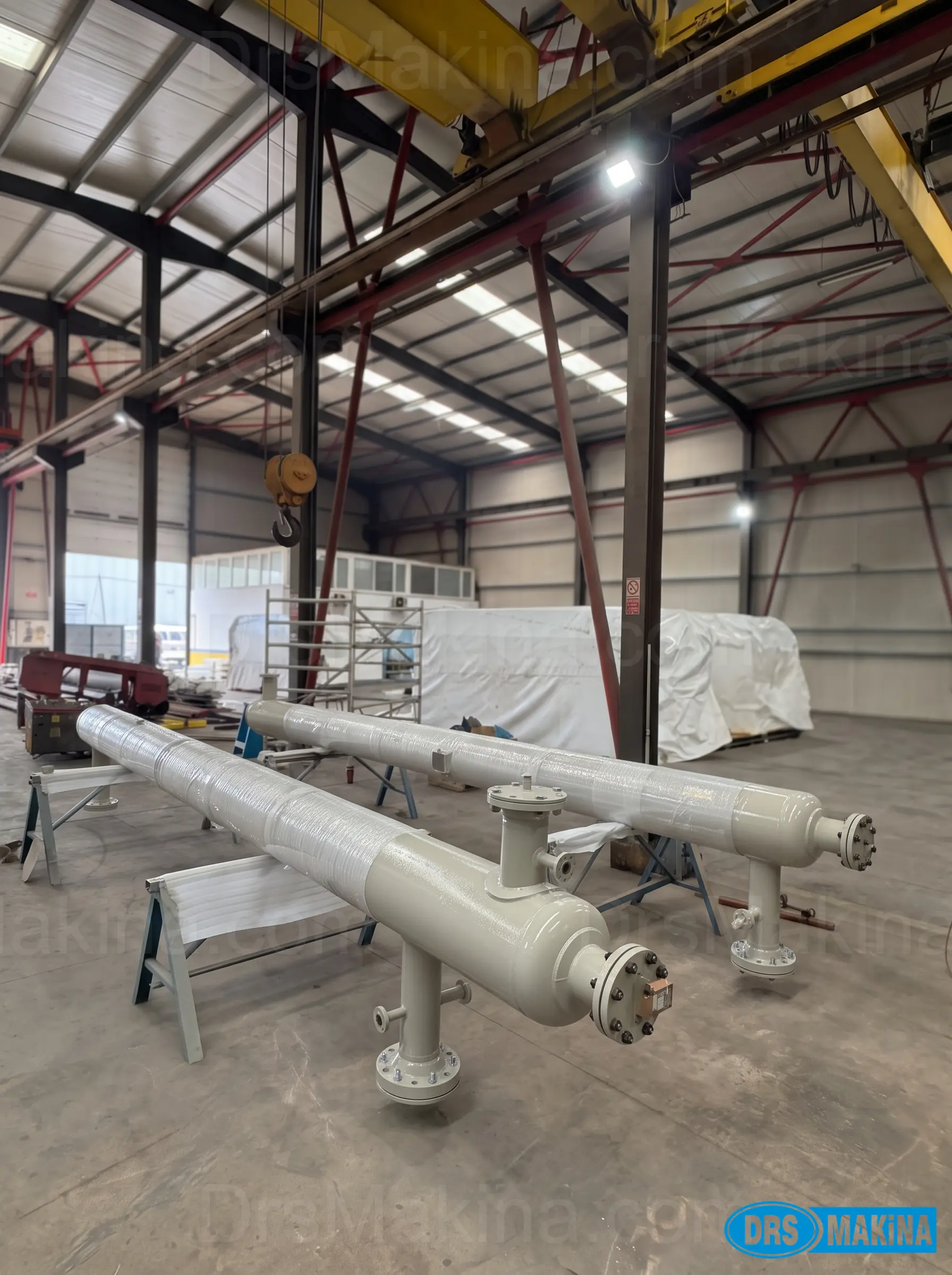
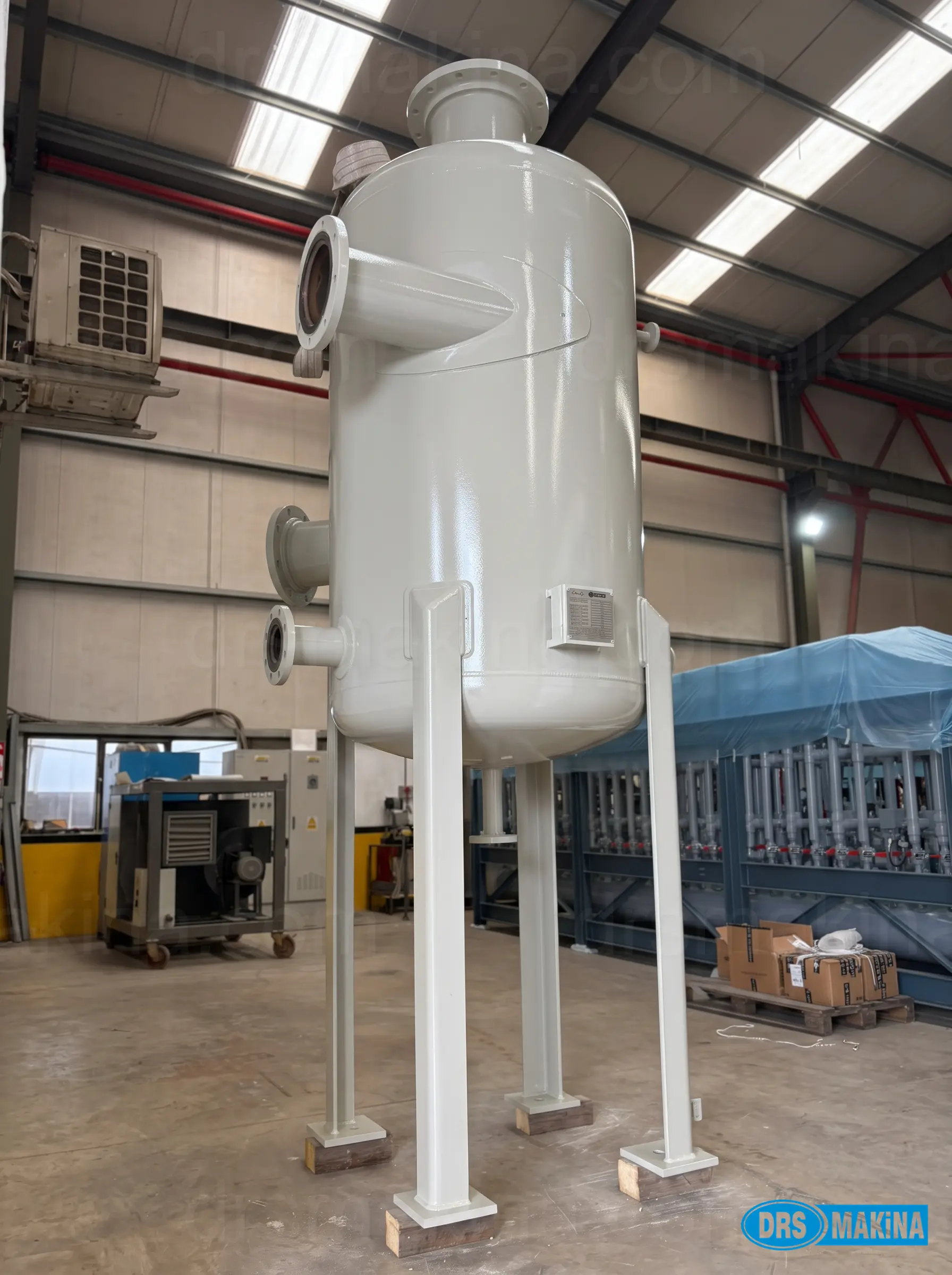
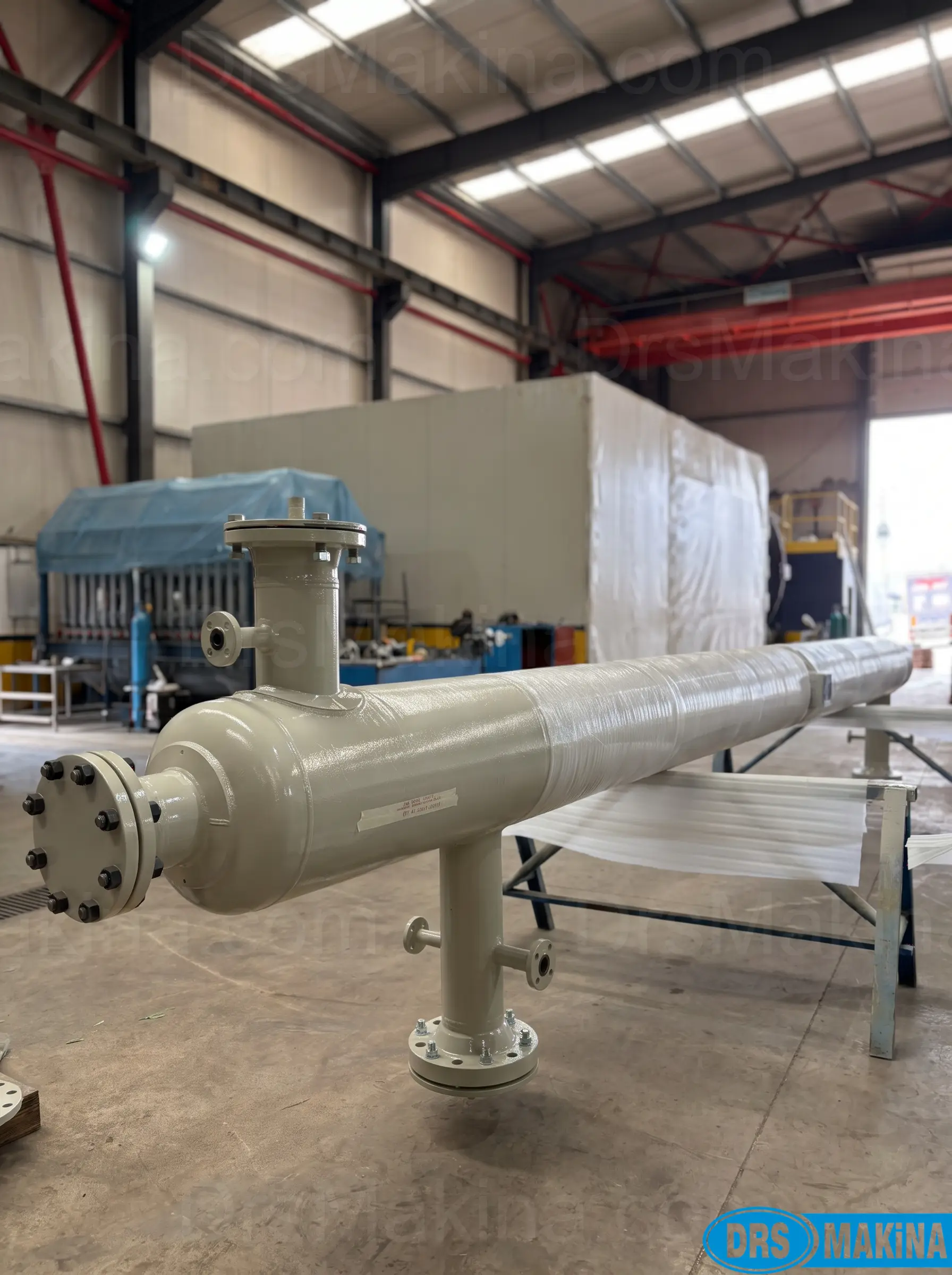
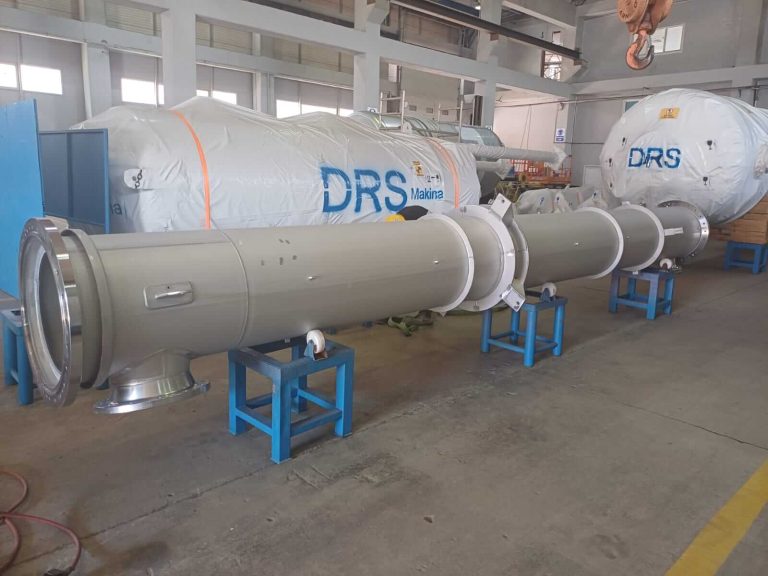
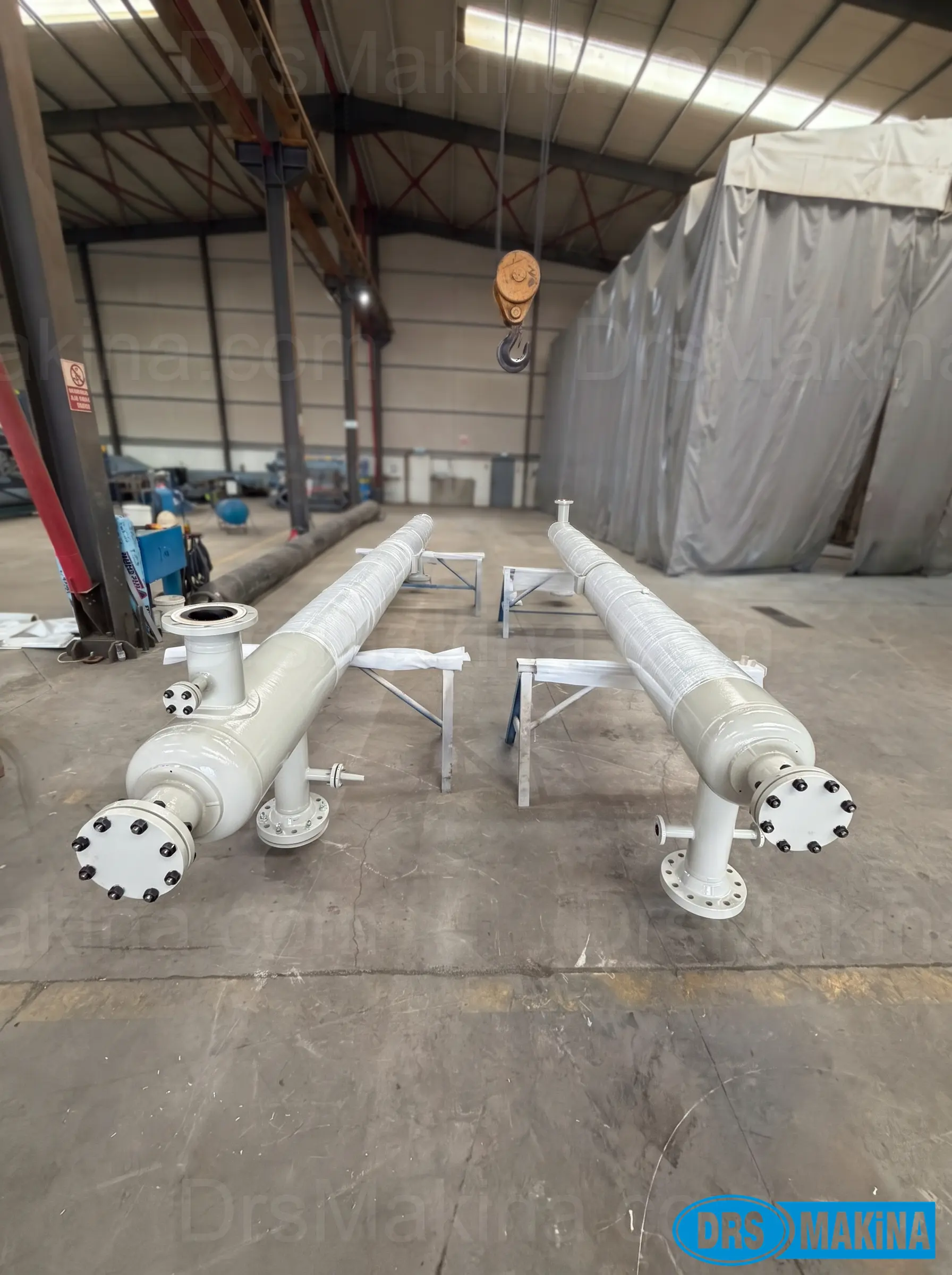
Critical process units across petrochemical complexes demand uncompromising engineering rigor, where high-integrity pressure vessel fabrication relies on validated metallurgy, precision forming, and exhaustive non-destructive testing (NDT). DRS Makina San. ve Tic. Ltd. Şti. has successfully executed the turnkey mechanical engineering, procurement, and fabrication of two (2) units of Suction Surge Drums (Equipment Tag: 215-K-203-3A/3B) destined for the Aliağa facility of SOCAR (PETKİM Petrokimya Holding A.Ş.). Managed under project code DRS-A-26014, the scope encompassed full mechanical code design, parametric stress analyses, certified European raw material procurement, specialized welding, post-weld heat treatment (PWHT), and accredited third-party inspection (TPI) to ensure maximum operational safety under cyclic operating loads.
Engineering Design, ASME Sec. VIII Div. 1 Compliance and PV Elite Calculations
The initial phase focused on comprehensive engineering design and finite element calculations based on general arrangement drawings and thermodynamic data sheets provided by SOCAR. Shell courses, 2:1 semi-ellipsoidal heads, and nozzle neck wall thicknesses were verified using PV Elite software in strict accordance with the latest edition of the internationally recognized ASME Boiler and Pressure Vessel Code (BPVC) Section VIII Division 1. DRS Makina verified that all calculated minimum design thicknesses comfortably surpassed nominal shell requirements while integrating a mandatory 3.2 mm corrosion allowance across all wetted surfaces. Internal components were configured to maintain optimal gas-liquid phase separation dynamics without introducing flow restrictions. Furthermore, heavy-duty lifting lugs were engineered and analyzed for static and dynamic stress profiles by DRS Makina’s in-house engineering team, ensuring collision-free orientations and zero bending moment transfer to process nozzles during crane rigging and transport.
Metallurgical Integrity, Material Selection, and Heavy-Duty Class 600 Flanges
To resist corrosive petrochemical process fluids and cyclic vibration, the specified raw material transformations were applied without deviation. Shell plates and dished ends were constructed from fine-grain, normalized SA516 Gr70 carbon steel boiler plate offering superior notch toughness. Seamless SA106 GrB carbon steel pipes were specified for process and instrument nozzles, while high-integrity SA105 forged steel flanges were selected for external piping interfaces. To provide high mechanical rigidity and counter pipe strain under severe service, nozzle interfaces feature ASME B16.5 Class 600 pressure ratings. Even though normal operating pressures range between 12 and 16 bar(g), incorporating Class 600 flanges guarantees joint tightness and eliminates gasket blowouts under unexpected pressure surges. All carbon steel plates, pipes, butt-welded fittings, and forged components were sourced from certified European mills, accompanied by EN 10204 Type 3.1 inspection certificates. High-tensile Grade 8.8 stud bolts and domestic Spiral Wound Gaskets (SWG) with inner/outer guide rings were deployed for flanged connections.
Advanced Fabrication Methodology, Certified Welding, and Full PWHT
Fabrication was conducted entirely within DRS Makina’s advanced manufacturing facility located in Dilovası / Kocaeli. Welding procedures were executed through Gas Tungsten Arc Welding (TIG/GTAW) for root runs, followed by Shielded Metal Arc Welding (SMAW) and Gas Metal Arc Welding (GMAW/FCAW) fill and cap passes. All welding operations adhered strictly to DRS Makina’s pre-qualified Welding Procedure Specifications (WPS) supported by Procedure Qualification Records (PQR) in compliance with ASME Section IX and EN ISO 15614-1. Welders are certified under EN ISO 9606-1 and ASME Section IX, upholding the quality standards of ISO 3834-2. Following cold forming and full weld assembly, the vessels underwent Post-Weld Heat Treatment (PWHT) in a calibrated, furnace environment. This thermal cycle relieved microstructural residual stresses induced by welding and rolling, re-establishing ductile grain structures and mitigating future stress corrosion cracking (SCC) risks in sour service.
Non-Destructive Testing (NDT), PED Module G, and Hydrostatic Proof Test
Quality assurance and statutory verification were governed by European Pressure Equipment Directive 2014/68/EU (PED) Category IV Module G (Unit Verification) protocols, under direct surveillance by Notified Body TÜV AUSTRIA TURK for CE marking. Following the PWHT cycle, all longitudinal and circumferential pressure-retaining butt welds underwent 100% Radiographic Testing (RT-1) alongside 100% Ultrasonic Testing (UT) to detect volumetric and planar flaws. Following non-destructive evaluations, the vessels were positioned horizontally on heavy shop test beds and subjected to a certified hydrostatic pressure test at 24 bar(g) (1.5 times the 16 bar(g) maximum allowable working pressure) with demineralized water. Calibrated digital pressure logging confirmed zero pressure drop and hermetic integrity across all joints. Through this milestone, DRS Makina continues to reinforce its stature as a premier partner for custom special process equipment manufacturing across global energy and petrochemical sectors.
Surface Preservation, Pressurized Nitrogen Blanketing, and Project MDR
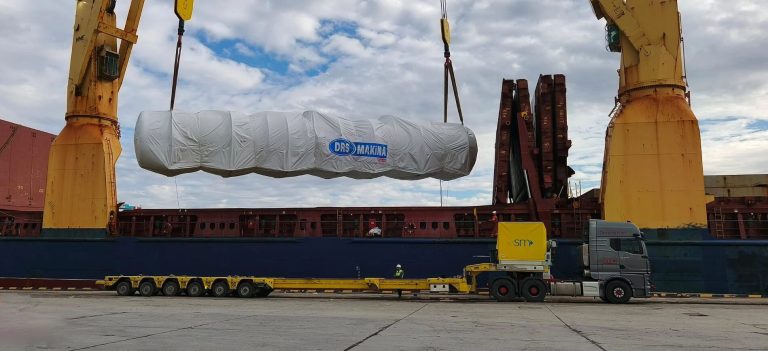
Upon final inspection, exterior carbon steel surfaces were blast-cleaned to ISO 8501-1 SA 2.5 cleanliness, removing mill scale and contaminants to yield an anchor profile suitable for coating adhesion. Surface preservation was executed according to SOCAR specification ABU-ITR-SPC-0008, utilizing a multi-coat high-build epoxy primer and weather-resistant polyurethane topcoat engineered for coastal refinery exposures. To safeguard the bare internal steel surfaces from atmospheric moisture, condensation, and flash rusting during marine/terrestrial shipping and site storage, the vessels were hermetically sealed and pressurized with Nitrogen (N₂)blanketing per SOCAR specification ABU-ITR-SPC-0017_1 clause 5.11. Secured on custom-built treated wooden saddles, the equipment was transported to the SOCAR Aliağa refinery via specialized heavy-haul carriers. Comprehensive documentation—including EN 10204 3.1 material test reports (MTR), NDT records, PWHT temperature-time charts, hydrostatic test logs, and TÜV AUSTRIA TURK CE conformity certification—was consolidated and delivered in the official Manufacturer Data Report (MDR).